About the University
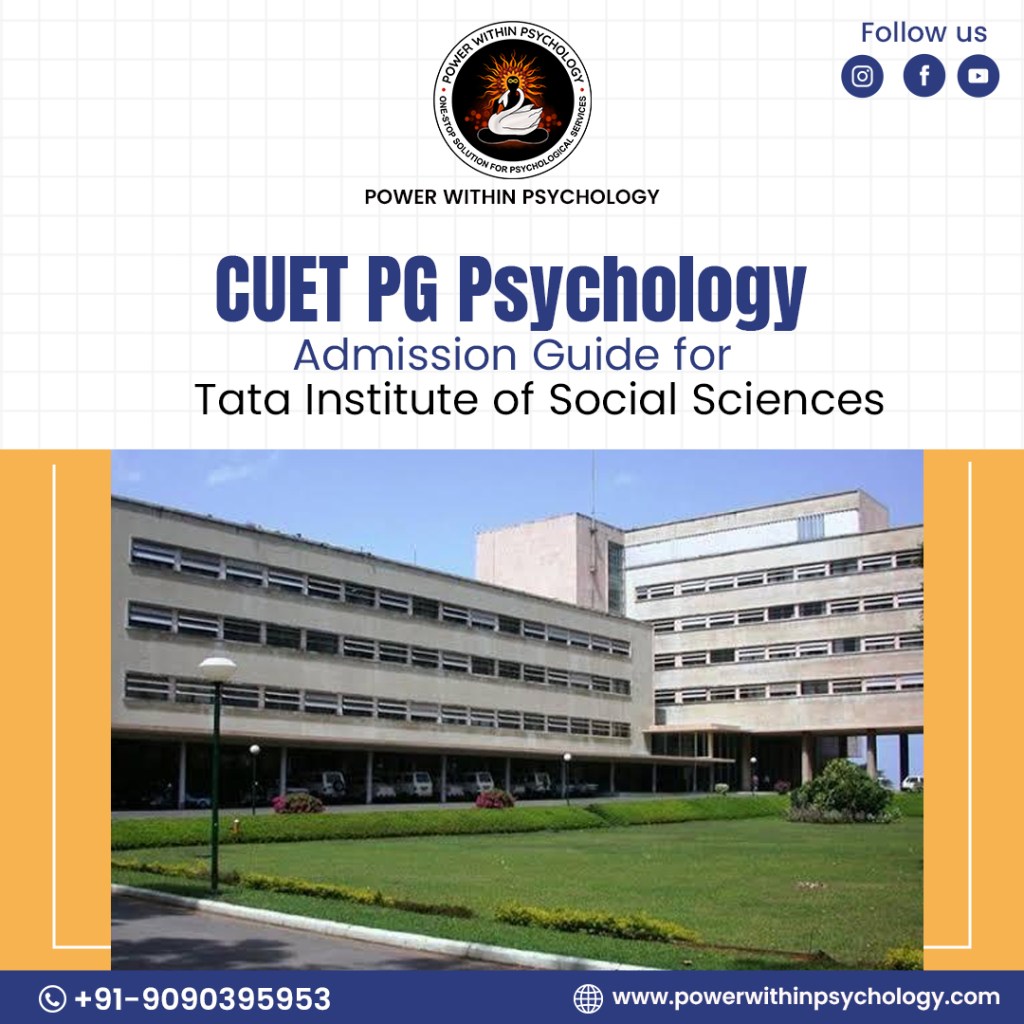
The Tata Institute of Social Sciences (TISS) was established in 1936 as the Sir Dorabji Tata Graduate School of Social Work. In 1944, it was renamed as the Tata Institute of Social Sciences. A significant milestone in its journey came in 1964, when it was declared a Deemed to be University under Section 3 of the University Grants Commission (UGC) Act, 1956.
Vision
The vision of TISS is to be an institution of excellence in higher education that continually responds to changing social realities. It strives to do so through the development and application of knowledge, with the aim of building a people-centred, ecologically sustainable, and just society. The Institute is deeply committed to promoting and protecting dignity, equality, social justice, and human rights for all.
Mission
In alignment with its vision and core principles, TISS organizes teaching programmes to foster the growth of competent and committed professionals. These professionals are equipped for effective practice in diverse fields of social relevance.
TISS has four campuses: TISS Mumbai (Main Campus), TISS Tuljapur (Off-Campus), TISS Hyderabad (Off-Campus), and TISS Guwahati (Off-Campus). The main campus is located at V.N. Purav Marg, Deonar, Mumbai – 400088, Maharashtra, India.
School of Human Ecology
The M.A. in Applied Psychology (Clinical and Counselling Practice) offered by the School of Human Ecology at TISS Mumbai is a specialized program designed to address the growing mental health challenges in India. With a focus on both clinical and counselling domains, the program trains students to become competent mental health professionals capable of delivering developmental, preventive, and therapeutic interventions. Emphasizing a blend of theory and practice, cultural sensitivity, and research-based training, the course prepares learners for real-world challenges through supervised fieldwork, internships, and a strong foundation in psychological theory and self-awareness.

Master of Arts in Applied Psychology (Clinical and Counseling Practice)
| Schedule for PG Admissions 2025 | Click here to know the detailed schedule |
Program Overview
- Duration: 2 Years (4 Semesters)
- Total Seats: 30
- Eligibility Criteria:
- Eligibility for Master of Arts in Applied Psychology (Clinical and Counselling Practice)
- (i) Candidates who have completed full time B.A./B.Sc. Honors in Psychology, in regular mode;Candidates who have completed full time B.A./B.Sc. General – with a minimum of three papers in Psychology, in regular mode.
- (ii) Candidates who have completed any Bachelor’s Degree from a recognized University and have completed a University recognized one-year, part-time/full-time post-graduate diploma in counselling fulfilling the UGC criterion of a minimum of 40 credits (Distance and online diploma courses will not be considered).



Semester-wise Course Structure (Total Credits: 80)
Semester I – Total Credits: 20
- AP 1: Counselling Process & Micro-skills – I (Core) – 2 credits
- AP 2: Counselling Process & Micro-skills – II (Skill Enhancement) – 4 credits
- AP 3: Approaches to Psychotherapy and Counselling – I (Core) – 2 credits
- AP 4: Introduction to Research Methodology (Core) – 2 credits
- AP 5: Understanding Psychological Problems – I (Core) – 2 credits
- AP 6: Human Growth and Development – I (Core) – 2 credits
- AP 7: Socio-Cultural Context of Counselling (IKS) (IKS) – 2 credits
- AP 8: Fieldwork Preparation (Core) – 2 credits
- AP 9: Field Visits & Practicum I (Fieldwork) – 2 credits
Semester II – Total Credits: 20
- AP 10: Understanding Psychological Problems – II (Core) – 2 credits
- AP 11: Approaches to Psychotherapy and Counselling – II (Core) – 2 credits
- AP 12: Statistics and Data Analysis (Skill Enhancement) – 2 credits
- AP 13: Psychological Assessment and Diagnostics – I (Skill Enhancement) – 2 credits
- AP 14: Ethics in Clinical and Counselling Practice (Core) – 2 credits
- AP 15: Field Practicum II (Fieldwork) – 4 credits
- AP 16: Human Growth and Development – II (Core) – 2 credits
- CBCS Electives – 4 credits
Semester III – Total Credits: 20
- AP 17: Psychological Assessment and Diagnostics – II (Skill Enhancement) – 2 credits
- AP 18: Approaches to Psychotherapy and Counselling – III (Core) – 2 credits
- AP 19: Qualitative Data Analysis (Skill Enhancement) – 2 credits
- AP 20: Community Mental Health (Core) – 2 credits
- AP 21: Disciplinary Elective (Choose one) (Elective) – 2 credits
- AP 21.1: Child and Adolescent Psychotherapy
- AP 21.2: Couple and Family Therapy
- AP 21.3: Foundations of Trauma Therapy
- AP 22: Field Practicum III (Linked to Elective) (Fieldwork) – 6 credits
- AP 23: Psychology in the Indian Tradition (IKS) – 2 credits
- AP 24: Masters Dissertation (Proposal Presentation) (Research) – 2 credits
Semester IV – Total Credits: 20
- AP 24: Masters Dissertation (Full Submission) (Research) – 8 credits
- AP 25: Disciplinary Elective (Choose one) (Elective) – 2 credits
- AP 25.1: School Counselling
- AP 25.2: Counselling Older Adults
- AP 25.3: Advanced Assessment & Therapeutic Techniques in Clinical Practice
- AP 25.4: Substance Use and Addiction
- AP 26: Field Practicum IV (Linked to Elective) (Fieldwork) – 6 credits
- AP 27: MOOC (Massive Open Online Course) – 2 credits
- AP 28: Psychological Assessment and Diagnostics (Skill Enhancement) – 2 credits
- AP 29: Internship (Compulsory, Non-Credit Course – 90 hours)


Application Procedure
- Candidates must register and apply for admission at the TISS through the Samarth portal.
- Visit the official TISS admission portal: https://tisscuet.samarth.edu.in/pg/
- Complete the registration and fill out the application form with required details.
- Upload necessary documents (such as scorecard, mark sheets, certificates, and photographs).
- Pay the application fee as specified.


Leave a Reply