
Thinking of becoming a Psychology professor or research scholar?
Then UGC NET Psychology is your golden ticket! Whether you dream of lectures halls, PhD programs or government fellowships — this exam opens the door. This blog is your one-stop guide for understanding everything about UGC NET Psychology.
What is UGC NET Psychology ?
UGC NET (National Eligibility Test) is a national-level exam. If you qualify, you become eligible for roles like Assistant Professor, can win the Junior Research Fellowship (JRF) (with a monthly stipend) or secure direct entry to PhD programs—no separate entrance needed. It’s conducted by National Testing Agency(NTA) twice a year (usually in June and December) and is now completely computer‑based (CBT).
Eligibility Criteria
- Master’s Degree: You must have a Master’s in Psychology (or related field) from a recognized university with at least 55% marks (50% for SC/ST/OBC/PwD/Transgender).
- Final-year students can also apply, but must show proof of the required marks within two years of the result.
- JRF Age Limit: Under 30 years
- Assistant Professor: No age limit
Exam Pattern
| Paper | Subject | Questions | Marks | Duration |
|---|---|---|---|---|
| Paper I | General Aptitude (Teaching & Research) | 50 | 100 | 3 Hours Combined |
| Paper II | Psychology | 100 | 200 |
- No negative marking
- All questions are multiple choice
- Exam is held online (CBT) mode
- Language: English or Hindi
Syllabus
Paper I
Subjects covered include –
- Teaching Aptitude
- Research Aptitude
- Comprehension
- Communication
- Mathematical Reasoning and Aptitude
- Logical Reasoning
- Data Interpretation
- Information and Communication Technology (ICT)
- People, Development and Environment
- Higher Education System
There will be 50 questions in Paper I. Each question carries 2 marks. Paper I is worth 100 marks. There is no negative marking in this paper.
Paper II
- Emergence of Psychology
- Psychological thought in some major Eastern Systems
- Western Systems
- Essential aspects of knowledge paradigms
- Research Methodology and Statistics
- Research: Meaning, Purpose, and Dimensions
- Paradigms of Research
- Statistics in Psychology
- Correlational Analysis
- Experimental Designs
- Psychological Testing
- Types of tests
- Areas of testing
- Applications of psychological testing in various settings
- Biological bases of behavior
- Sensory systems
- Neurons
- Methods of Physiological Psychology
- Muscular and Glandular system
- Attention, Perception, Learning, Memory, and Forgetting
- Thinking, Intelligence, and Creativity
- Theoretical perspectives on thought processes
- Concept formation
- Problem-solving
- Decision-making
- Metacognition
- Intelligence
- Creativity
- Personality, Motivation, Emotion, Stress Management
- Determinants of Personality
- Approaches to the study of personality
- Basic motivational concepts
- Approaches to the study of motivation
- Emotions and theories of emotions
- Conflicts, Stress, and Coping
- Social Psychology
- Traditional theoretical perspectives
- Social perception
- Group and Social Influence
- Applied Social Psychology
- Human Development and Interventions
- Developmental processes
- Theories of development
- Psychotherapies
- Guidance in schools and Counselling
- Emerging Areas
- Issues of Gender, Poverty, Disability, and Migration
- Peace psychology
- Wellbeing and self-growth
- Health
- Psychology and technology interface
UGC NET Cutoff 2025
| Category | JRF | Assistant Professor | PhD |
|---|---|---|---|
| Unreserved (UR) | 248 | 226 | 200 |
| OBC (NCL) | 238 | 208 | 180 |
| EWS | 240 | 208 | 170 |
| SC | 228 | 194 | 166 |
| ST | 220 | 190 | 158 |
Top Tips
- Know the Syllabus & Pattern: Download the official syllabus and go through past question papers.
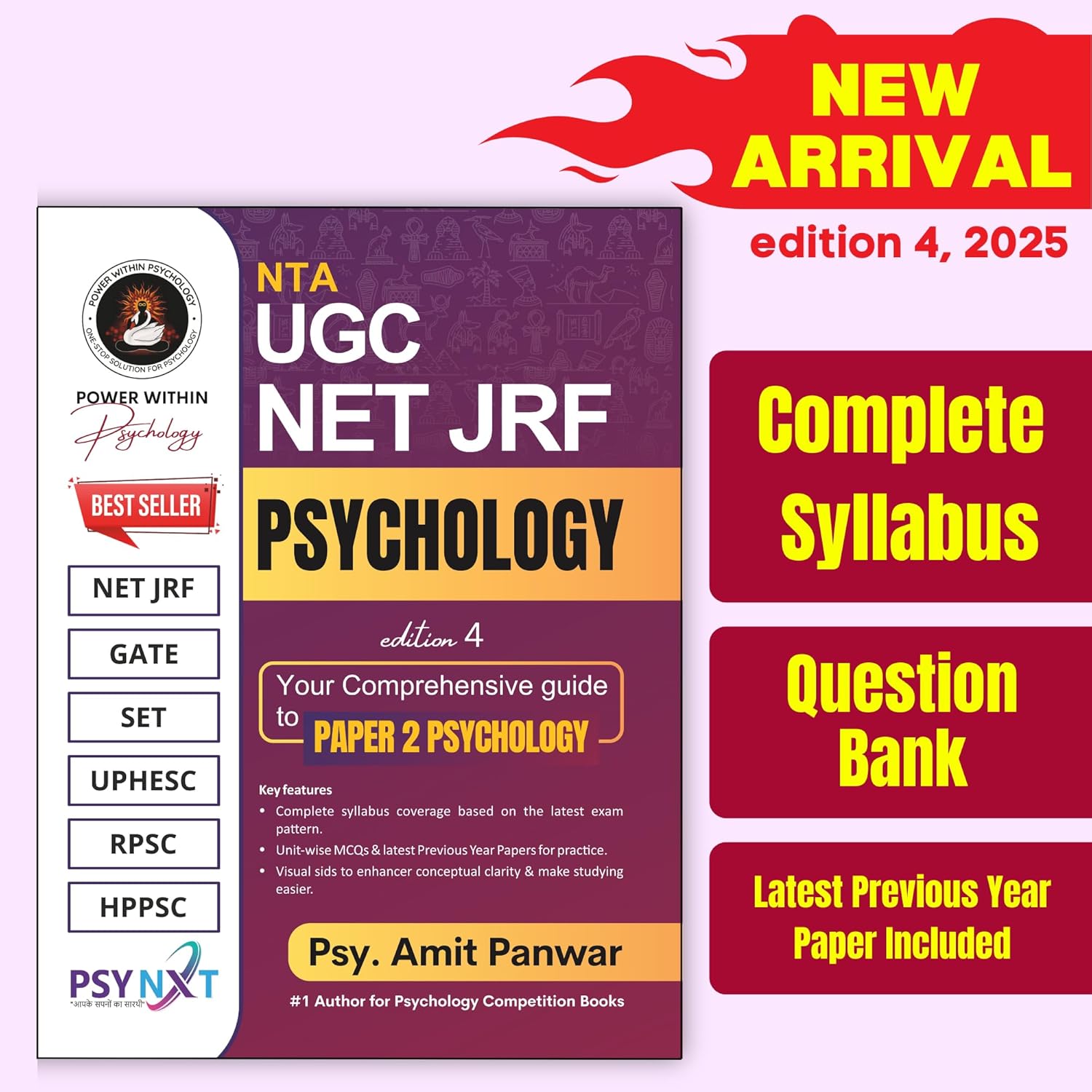
- Use Standard Books: Suggested texts include titles by Hilgard, Baron, Alan Carr, Sarason, and others.
- Practice Previous Year Papers: This helps you spot question trends and strengthen weak areas.
- Revision & Mock Tests: Focus on revision in the last month, and simulate the exam environment with mock tests.
- Manage Stress: Stay calm and confident—mindfulness and short breaks help a lot!





Leave a Reply