Dear Future Me,
If you’re reading this, maybe you’re already a Counselling Psychologist, sitting in your clinic, with a plant on your desk and a bookshelf that smells like effort. But let me take you back to where it began…
Maybe you would be introspecting these words after a few years. Here are a few steps to follow.
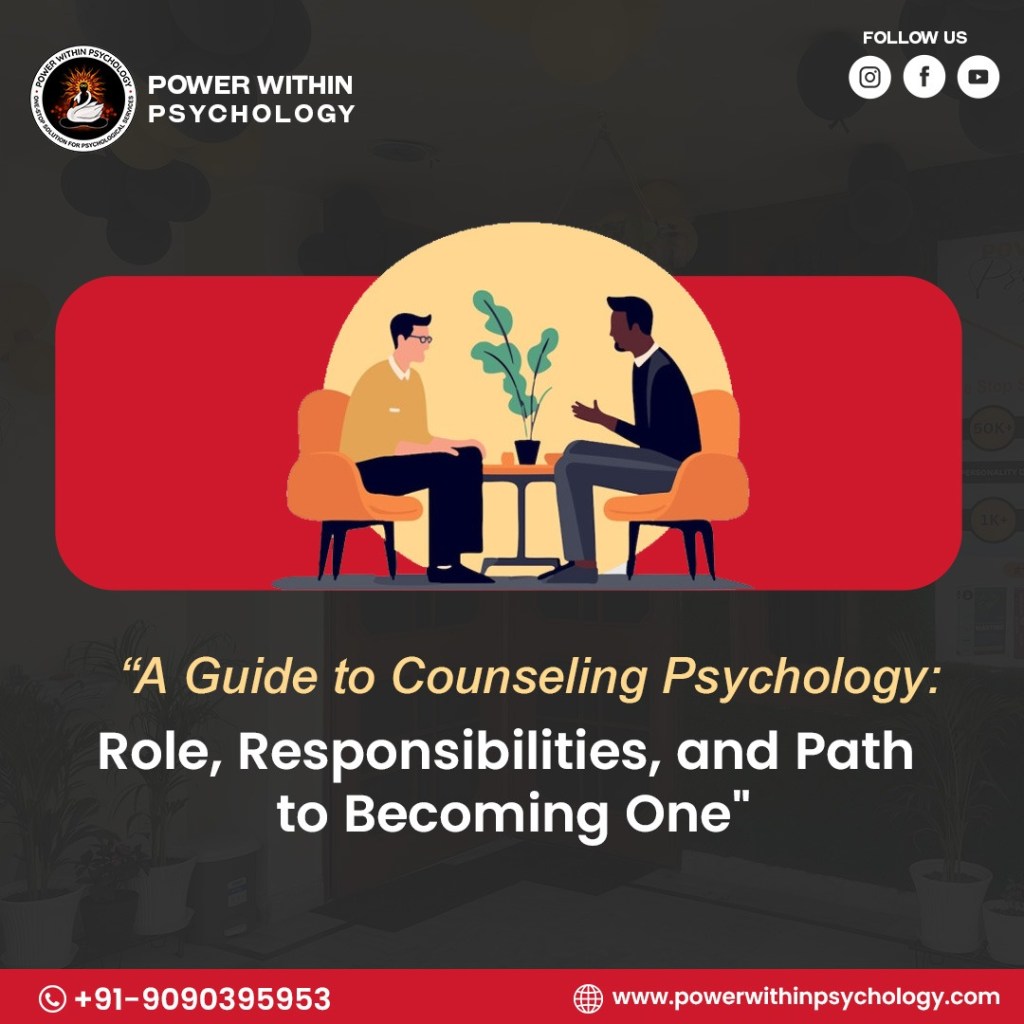
Who is a Counselling Psychologist ?
Counselling psychologists play a key role in caring for the mental and emotional health of others, diagnosing and treating conditions such as stress, conflict, grief or uncertainty about careers. Counselling psychologists help people overcome mental health challenges by creating customized therapies and treatment plans.
Difference between Clinical and Counselling Psychologist
Counselling and Clinical Psychology are closely related fields but differ in focus and approach.
Clinical psychologists usually work with more severe mental health issues like depression, trauma or anxiety disorders.
In contrast, counselling psychologists help people deal with everyday life challenges such as relationship issues, career decisions or personal growth. While both are trained in assessment and therapy, counselling psychology takes a strengths-based, holistic approach, often focusing on well-being, development and cultural context.
Both professionals can work in similar settings like hospitals, universities, and private clinics.
Issues addressed by a counselling psychologist
- School problems and work-related conflicts
- Difficulty in choosing a career or handling retirement
- Marital and family issues
- Struggles with learning and developing new skills
- Daily life stress and managing stressors
- Organizational and workplace conflicts
- Coping with physical illness, injury, or disability
- Personal or social challenges
- Developing self-awareness and understanding oneself
- Relationship and interpersonal problems
- Mental health and psychological disorders
Skills required by Counseling Psychologist
1. Active Listening
Listening is at the heart of effective counselling. It involves being fully present, noticing not just words but tone, pauses and body language. A good counsellor listens without judgment, interruption or assumption, allowing clients to feel genuinely heard and understood.
2. Communication Skills
Clear, empathetic communication helps clients express themselves and feel safe. This includes:
- Using open-ended questions to explore deeper thoughts.
- Summarizing or paraphrasing to confirm understanding.
3. Reflection and Empathy
Reflective listening helps clients hear their own thoughts in a new light. Counsellors mirror emotions and statements to validate experiences and create emotional clarity.
4. Observation and Non-Verbal Sensitivity
Counselling involves being aware of unspoken cues—like posture, eye contact or tone shifts that might signal discomfort, sadness, or resistance. This helps deepen the understanding beyond what’s being said.
5. Guidance and Gentle Direction
When appropriate, counselling psychologists help clients set goals, challenge unhelpful patterns, or reframe perspectives. They provide insight without giving direct advice, encouraging autonomy and growth.

New Batch Begins | Enroll Now
How to become a counselling psychologist ?
1. Start with a Bachelor’s Degree
Begin by completing a 3–4 year undergraduate degree in Psychology or a related subject like Social Work. This builds your foundation in mental health, human behavior, and psychological theories.
2. Prepare and Clear the Entrance Exam
Most universities require you to clear an entrance exam for admission into a Master’s program in Counselling Psychology. Start preparing early and understand the syllabus.
3. Pursue a Master’s Degree
Enroll in a Master’s program (MA or MSc in Counselling Psychology). This usually takes 2 years and provides both theoretical and practical training in therapy, counselling techniques and assessment.
4. Pursue Additional Diploma or Specialized Certificate
After your Master’s, consider pursuing a diploma or specialized certification to become a Child Counsellor, Family Counsellor, or Career Counsellor. These additional qualifications will enhance your expertise and open up more career opportunities.
Undertake an Internship
Gain hands-on experience by working under a licensed psychologist or in a mental health organization. Internships help you apply your learning in real-life cases and build confidence in client interactions.
Start Professional Practice
Once you have your qualifications and internship experience, you can start practicing as a counselling psychologist either independently, in schools, hospitals, NGOs, or corporate settings.
Some common FAQs
Do you need a license to become a counselling psychologist in India? Answer: In India, counselling psychologists do not require a formal license to practice. Only clinical psychologists must register with the Rehabilitation Council of India (RCI).
Are there any courses one can pursue after Masters to gain counselling skills? Answer: After a Master’s, you can pursue courses like the Postgraduate Diploma in Guidance and Counselling (RCI Approved) offered by universities such as Jamia Millia Islamia, IGNOU, and NCERT (for school counselling). These programs build core counselling skills. You can also opt for certifications in CBT, REBT, or expressive therapies.
The journey to becoming a counselling psychologist in India is clear but it requires heart. If you’re ready to follow each step with purpose and patience, you won’t just build a career—you’ll be able to build a safe spaces for others to heal.
Mini Myth-Buster Section
❌ Myth: You have to be older to help others emotionally. ✅ Truth: What matters more is empathy, training and ethics — not age.
❌ Myth: Psychotherapy and Counselling are the same
✅ Truth: Psychotherapy and counselling are not the same—psychotherapy delves deeper into long-term emotional issues, while counselling focuses on short-term problem-solving and support.
Conclusion
Counselling psychology is a meaningful profession rooted in empathy, insight, and the science of human behavior. With a focus on everyday challenges and personal growth, counselling psychologists guide individuals toward healthier emotional lives. Whether through academic paths or skill-based training, the journey requires dedication and compassion. If you’re drawn to helping others and committed to learning, this field offers both purpose and impact.





Leave a Reply