Humans are inherently social beings. Our behavior, decisions, and even beliefs are often shaped by the people around us. In social psychology, three major ways groups influence individuals are conformity, obedience, and compliance. Understanding these helps explain peer pressure, authority influence, and everyday social interactions.
Conformity: Fitting in with the Group
Conformity is the tendency to adjust one’s behavior, thoughts, or attitudes to match those of a group, either due to real or imagined social pressure.
Types of Conformity:
Compliance: Publicly agreeing but privately disagreeing. Example: Applauding at a lecture even if you don’t feel impressed.
Identification: Conforming to establish or maintain a relationship. Example: Dressing like your favorite influencer to feel connected.
Internalization: Fully accepting group norms as your own. Example: Joining a club and adopting its eco-friendly practices genuinely.
Key Experiment: Asch’s Line Judgment Experiment (1951)
Setup: Participants were shown a standard line and three comparison lines, and asked to identify which line matched.
Procedure: Confederates (people in on the experiment) deliberately chose wrong answers.
Result: Many participants conformed to the majority, giving incorrect answers even though the correct answer was obvious.
Insight: People conform to avoid standing out (normative influence) or because they assume the group is correct (informational influence).
Obedience: Following Authority
Obedience occurs when individuals comply with orders from an authority figure, even if it goes against personal beliefs or morals.
Factors Influencing Obedience:
Authority Figure’s Legitimacy: People obey when they perceive authority as legitimate.
Proximity: Obedience increases when the authority is physically close.
Group Support: The presence of dissenters can reduce obedience.
Key Experiment: Milgram’s Shock Experiment (1963)
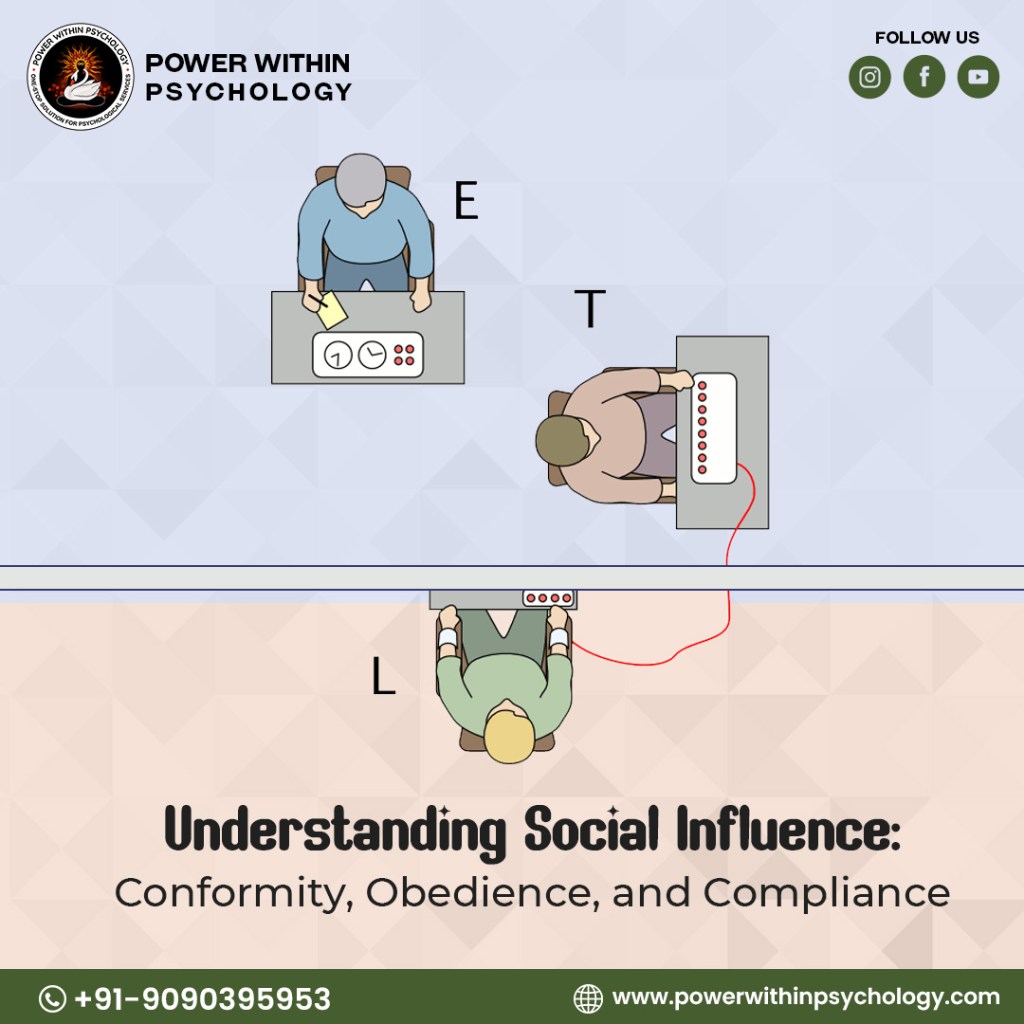
Setup: Participants were asked to administer electric shocks to a “learner” (actually an actor) whenever an answer was wrong.
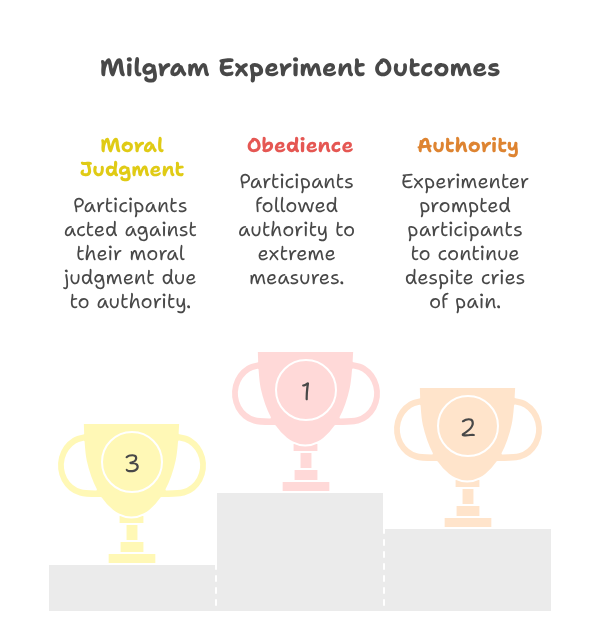
Procedure: Shock intensity increased with each wrong answer. Participants were prompted to continue by the experimenter.
Result: About 65% of participants administered shocks up to the maximum voltage, despite hearing simulated cries of pain.
Insight: Ordinary people are capable of following authority to extreme measures, even against their moral judgment.
Takeaway: Obedience can explain behaviors in real-life situations like war crimes or unethical workplace practices.
Compliance: Yielding to Requests
Compliance is the act of agreeing to a request from another person, without necessarily following authority or group norms.
Techniques of Compliance:
Foot-in-the-Door: Start with a small request, then escalate. Example: Asking a friend to sign a petition, then later requesting a donation.
Door-in-the-Face: Start with a large request, then offer a smaller one. Example: Asking for $500, then requesting $50 when refused.
Low-Ball Technique: Agreeing under favorable terms, then adding hidden costs. Example: Buying a car at advertised price, then discovering extra charges.
That’s-Not-All Technique: Adding bonuses to make the deal more attractive. Example: TV infomercials offering “Buy one, get one free.”
Example in Daily Life:
Sales promotions, charity campaigns, and social requests often use these compliance techniques.
Conformity vs Obedience vs Compliance
Aspect
Conformity
Obedience
Compliance
Definition
Adjusting behavior to group norms
Following authority instructions
Agreeing to requests
Influence Source
Group/Peers
Authority figure
Requester/Peer
Internalization
Sometimes internalized
Often external obedience
Usually external
Example
Dressing like friends
Soldier following orders
Agreeing to buy a product
Applications in Everyday Life
Education: Students obey teachers’ instructions and conform to class norms.
Marketing & Advertising: Brands use compliance techniques to influence purchases.
Workplace: Employees follow authority, adhere to group norms, and comply with requests.
Social Movements: Understanding conformity and obedience helps explain mass behaviors in campaigns or protests.
Conformity, obedience, and compliance are central mechanisms of social influence. They can foster cooperation and social harmony but may also lead to unethical decisions if followed blindly. Awareness of these forces empowers individuals to make conscious choices, resist negative peer pressure, and interact effectively in social settings.
Share this article by Power Within Psychology (PWP):
Power Within Psychology is India’s most trusted platform for Psychology entrance exam preparation. As an ISO 9001:2015 certified institution, we offer expert-led coaching, strategic resources, and authentic guidance for CUET PG, UGC NET JRF, GATE, MPhil/MA Clinical Psychology, PsyD, and more.
Through our PWP blogs, we empower aspirants with insights, strategies, and stories that inspire success.








Leave a Reply