

“Why do we cry when sad, laugh when happy, or freeze when afraid? Emotions shape every human experience.”
Emotion → A psychological state that combines feelings (subjective experience), physiological arousal (body reactions), and behavior (expressions or actions).
Example: Fear = feeling scared + increased heartbeat + running away.
Components of emotion:
- Physiological arousal (heart rate, sweating)
- Cognitive experience (what we label as fear, joy)
- Behavioral response (fight, flight, smile, cry)
Types of Emotions
- Basic Emotions (Ekman, universal across cultures)
- Happiness
- Sadness
- Fear
- Anger
- Surprise
- Disgust
Paul Ekman (1970s) identified universal emotions in his theory of basic emotions—happiness, sadness, fear, anger, surprise, and later added disgust, forming the six basic emotions.
- Complex Emotions
- Love, guilt, pride, shame, jealousy → combinations of basic emotions + social/cultural influence.

Theories of Emotion
Organize chronologically for clarity:
- Facial Feedback Hypothesis (1872) – Charles Darwin
- Core Idea: It says that our facial expressions can influence our emotions, smiling can make us feel happier, frowning can make us feel sad.
- Expressions influence emotions – Reciprocal relationship
- Core Idea: It says that our facial expressions can influence our emotions, smiling can make us feel happier, frowning can make us feel sad.

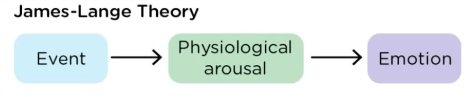
- James-Lange Theory (1884–85)
- Core Idea: Emotion is a result of bodily changes.
You don’t cry because you’re sad — you feel sad because you cry. According to this theory, the body reacts first, and then your brain interprets it as an emotion..- We feel afraid because we tremble.
- Core Idea: Emotion is a result of bodily changes.
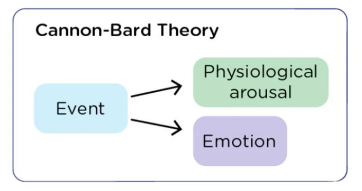
- Cannon-Bard Theory (1927)
- Core Idea: Body and emotion respond together.
Cannon and Bard argued that the brain sends signals to the body and the emotional centers at the same time. So, you feel afraid and your body reacts — simultaneously, not one after the other.- Emotion + bodily arousal happen simultaneously.
- We feel afraid and tremble at the same time.
- Core Idea: Body and emotion respond together.
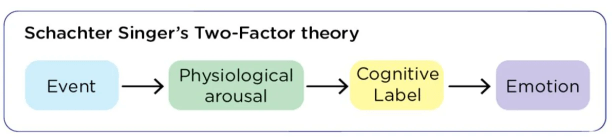
- Schachter-Singer Two-Factor Theory (1962)
- Core Idea: Emotion = Physical Arousal + Cognitive Interpretation.
This theory added a mental layer: it’s not enough to feel aroused — your brain also has to interpret the context to label the emotion. - Heart races → we think “danger” → feel fear.
- Core Idea: Emotion = Physical Arousal + Cognitive Interpretation.
- Lazarus’ Cognitive Appraisal Theory (1966)
- Core Idea: Thoughts come before emotions.
This theory says it’s not just about the physical or even the label — it’s about how you evaluate the situation. Emotion results from appraisal, or how you make sense of what’s happening.- Thought comes before emotion.
- We evaluate the situation → decide how to feel.
- Core Idea: Thoughts come before emotions.


10 CUET-style MCQs
Q1. Which of the following is NOT a component of emotion?
a) Physiological arousal
b) Cognitive experience
c) Behavioral response
d) Genetic inheritance
Q2. Fear = feeling scared + increased heartbeat + running away. This example highlights which aspect of emotion?
a) Only cognitive
b) Only physiological
c) Integration of feeling, arousal, and behavior
d) Only behavioral
Q3. Paul Ekman’s theory of basic emotions originally included happiness, sadness, fear, anger, and surprise. Which was added later?
a) Guilt
b) Disgust
c) Love
d) Pride
Q4. Complex emotions such as guilt, jealousy, and pride are best explained as:
a) Instinctive emotions
b) Universal emotions
c) Combinations of basic emotions influenced by culture
d) Physiological arousal without cognition
Q5. The Facial Feedback Hypothesis suggests:
a) Emotions depend only on brain activity
b) Expressions can influence emotional experiences
c) Emotions and expressions are unrelated
d) Emotions occur after cognitive labeling
Q6. According to the James-Lange Theory (1884–85):
a) Emotions and bodily changes occur together
b) Emotions are based on physiological changes we perceive
c) Thought comes before emotion
d) Emotions are determined only by external rewards
Q7. The Cannon-Bard Theory (1927) differs from James-Lange by proposing that:
a) Emotions don’t require body changes
b) Emotions and arousal happen simultaneously
c) Cognitive labeling is essential for emotions
d) Expressions create emotions
Q8. The Schachter-Singer Two-Factor Theory (1962) emphasizes:
a) Instincts as drivers of emotion
b) Emotion = arousal + cognitive label
c) Simultaneous arousal and emotion
d) Facial expressions create feelings
Q9. “We evaluate the situation first, and then decide how to feel.” This idea comes from:
a) Schachter-Singer Two-Factor Theory
b) Cannon-Bard Theory
c) Lazarus’ Cognitive Appraisal Theory
d) James-Lange Theory
Q10. Which sequence best represents the Facial Feedback Hypothesis?
a) Emotion → Expression → Behavior
b) Expression → Feedback to brain → Emotion felt
c) Cognition → Emotion → Expression
d) Arousal → Cognition → Expression
Answer Key
Q1 → d
Q2 → c
Q3 → b
Q4 → c
Q5 → b
Q6 → b
Q7 → b
Q8 → b
Q9 → c
Q10 → b





Leave a Reply