




Table of Content
Introduction
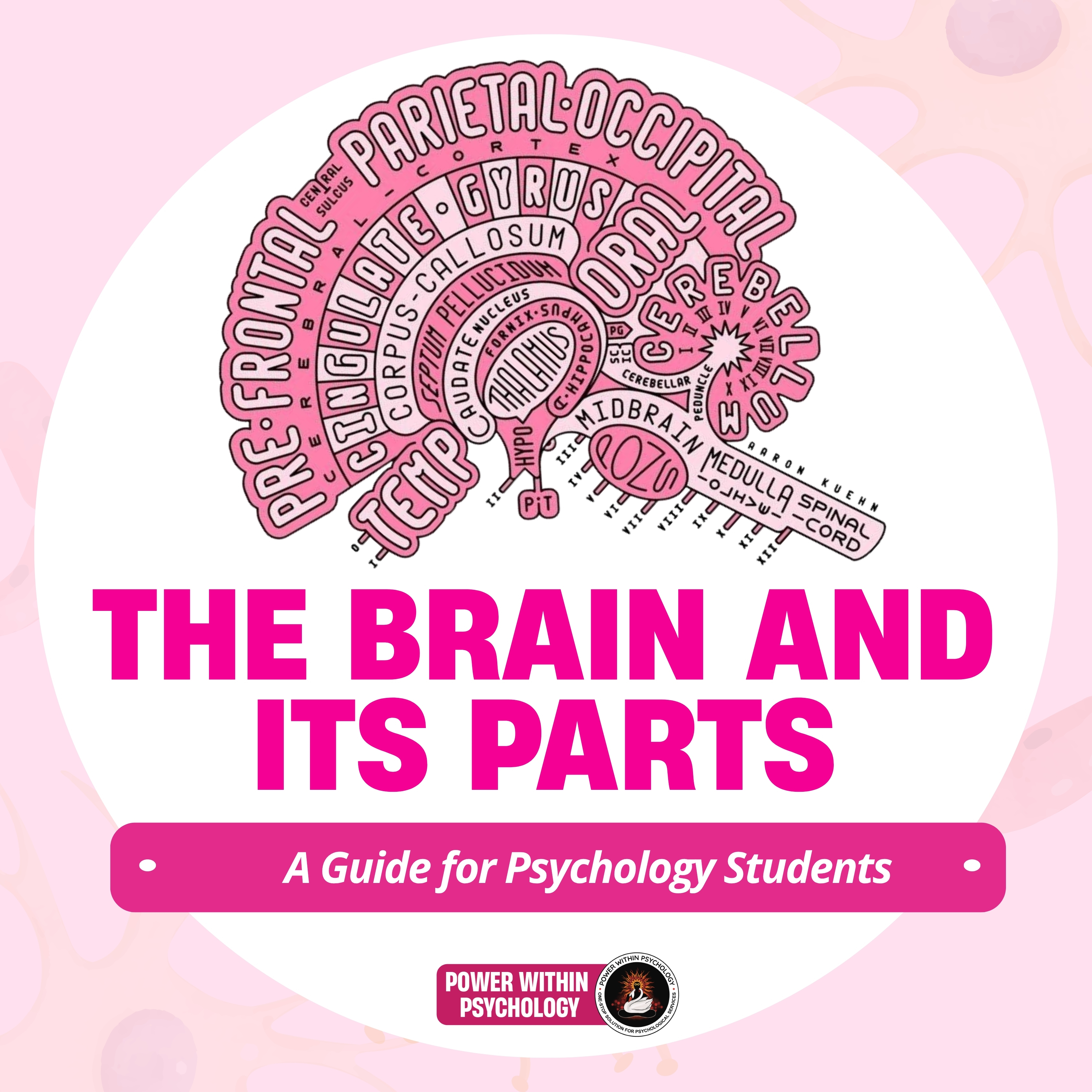
The human brain is not just an organ; it is the orchestra of our mind and behaviour, controlling thoughts, emotions, memories, and actions. Every sensation we feel, every decision we make, and every habit we form is guided by its intricate networks. Understanding the brain’s structure is like decoding the blueprint of human experience, a key step for psychology students aiming to connect biology with behaviour.
Why Does the Brain Have Two Sets of Names?
You might be curious why we only learned about the forebrain, midbrain, and hindbrain; & what are these names- telencephalon, diencephalon, mesencephalon, metencephalon, and myelencephalon?

The brain can be understood in two ways: embryonic names and adult names.

In the embryo (around week 3–5 of gestation), we use the terms prosencephalon, mesencephalon, and rhombencephalon to describe how the brain develops from the neural tube. Clue: Talking about weeks, formation, vesicles, neural tube → development
In the adult brain, we call them forebrain, midbrain, and hindbrain to show where they are and what they do. Clue: Talking about function, behaviour, damage → adult brain.

Same Brain, Two Names: Their parts
- Prosencephalon (Forebrain)
- Telencephalon → Cerebral hemispheres/cortex/cerebrum
- Diencephalon → Thalamus, hypothalamus, epithalamus, subthalamus
- Mesencephalon (Midbrain)
- Mesencephalon → Midbrain (tectum and tegmentum)
- Rhombencephalon (Hindbrain)
- Metencephalon → Pons and cerebellum
- Myelencephalon → Medulla oblongata

Brain Divisions: Forebrain, Midbrain, Hindbrain
1. Forebrain (Prosencephalon)
Divisions: Telencephalon + Diencephalon

Telencephalon: Forms the cerebral hemispheres, which include:
- Cerebral Cortex → higher cognitive functions (thinking, perception, voluntary movement)
- Basal ganglia → motor control and coordination
- Caudate nucleus → planning & controlling movements, learning
- Putamen → execution of movements (actual movement)
- Globus pallidus → regulates movement (start/stop, smooth flow)
- Subthalamic nucleus → controls unwanted movements
- Substantia nigra → produces dopamine → helps in smooth movement & reward
- Limbic system → emotions and memory
- Hippocampus → memory formation (learning new things)
- Amygdala → emotions (especially fear, anger)
- Hypothalamus → drives (hunger, thirst, hormones)
- Thalamus → sensory relay (important for emotional processing too)
- Cingulate gyrus → emotion + attention
- Fornix → connects different limbic parts (pathway)
- Corpus callosum → connects the two hemispheres
Diencephalon: Forms central structures, including:
- Thalamus → sensory relay station
- Hypothalamus → homeostasis, endocrine control, motivation

If the limbic system is said to be part of the telencephalon, then why are the hypothalamus and thalamus part of the diencephalon?
Limbic system ek single brain part nahi hai, balki different parts ka group hai jo milke kaam karte hain (emotion aur memory ke liye). Ye parts telencephalon aur diencephalon dono se hokar guzarta hai. Isliye, thalamus aur hypothalamus structurally diencephalon ka part hain, lekin functionally telencephalon (limbic system)ka bhi part maana jaata hain.
2. Midbrain (Mesencephalon)
Divisions: Mesencephalon

Tectum: Dorsal part of the midbrain; includes
- Superior colliculi → visual reflexes, eye movements
- Inferior colliculi → auditory reflexes, sound localisation
Tegmentum: Ventral to tectum; contains nuclei and tracts for
- Motor control (red nucleus)
- Arousal
- Pain modulation (periaqueductal gray)
Cerebral peduncles: Ventral bundles of axons carrying motor signals from the cortex to the brainstem and spinal cord; important for voluntary movement
Cerebral aqueduct: Narrow canal connecting the third and fourth ventricles; allows cerebrospinal fluid (CSF) flow
3. Hindbrain (Rhombencephalon)
Divisions: Metencephalon + Myelencephalon

Structures & Function:
- Metencephalon: Pons & Cerebellum
- Pons:
- Connects the cerebrum and cerebellum.
- Relays signals between the brain and the spinal cord.
- Involved in sleep, respiration, swallowing, and bladder control.
- Cerebellum:
- Controls balance, posture, and fine motor coordination.
- Processes sensory input for smooth movement.
- Pons:
- Myelencephalon: Medulla oblongata
- Regulates vital autonomic functions: heart rate, blood pressure, respiration, and digestion.
- Reflex centres: coughing, sneezing, vomiting, and swallowing.
Quick Overview


MCQs: Brain Divisions & Functions
1. Which embryonic brain vesicle gives rise to the cerebral hemispheres?
A) Mesencephalon
B) Metencephalon
C) Telencephalon
D) Diencephalon
2. The thalamus is part of which adult brain division?
A) Midbrain
B) Hindbrain
C) Forebrain
D) Cerebellum
3. Which structure is involved in balance and fine motor coordination?
A) Medulla oblongata
B) Cerebellum
C) Pons
D) Hippocampus
4. The superior colliculi are responsible for:
A) Auditory reflexes
B) Visual reflexes
C) Motor coordination
D) Memory formation
5. The medulla oblongata controls:
A) Emotions and memory
B) Reflexes like coughing and swallowing
C) Visual reflexes
D) Sensory relay
6. Which adult brain structure connects the two cerebral hemispheres?
A) Basal ganglia
B) Corpus callosum
C) Amygdala
D) Cerebral peduncles
7. The cerebral peduncles primarily carry:
A) Sensory signals to the cortex
B) Motor signals from the cortex to the spinal cord
C) CSF between ventricles
D) Reflex signals in the medulla
8. The hypothalamus is mainly responsible for:
A) Memory formation
B) Homeostasis and endocrine control
C) Visual reflexes
D) Fine motor coordination
9. Which part of the midbrain modulates pain?
A) Tectum
B) Periaqueductal grey in tegmentum
C) Superior colliculi
D) Cerebral peduncles
10. Which embryonic vesicle develops into the pons and cerebellum?
A) Myelencephalon
B) Metencephalon
C) Mesencephalon
D) Telencephalon
Answers:
- C) Telencephalon
- C) Forebrain
- B) Cerebellum
- B) Visual reflexes
- B) Reflexes like coughing and swallowing
- B) Corpus callosum
- B) Motor signals from the cortex to the spinal cord
- B) Homeostasis and endocrine control
- B) Periaqueductal gray in tegmentum
- B) Metencephalon
Share this article by Power Within Psychology (PWP):

Discover more from Power Within Psychology | BLOGS
Subscribe to get the latest posts sent to your email.