



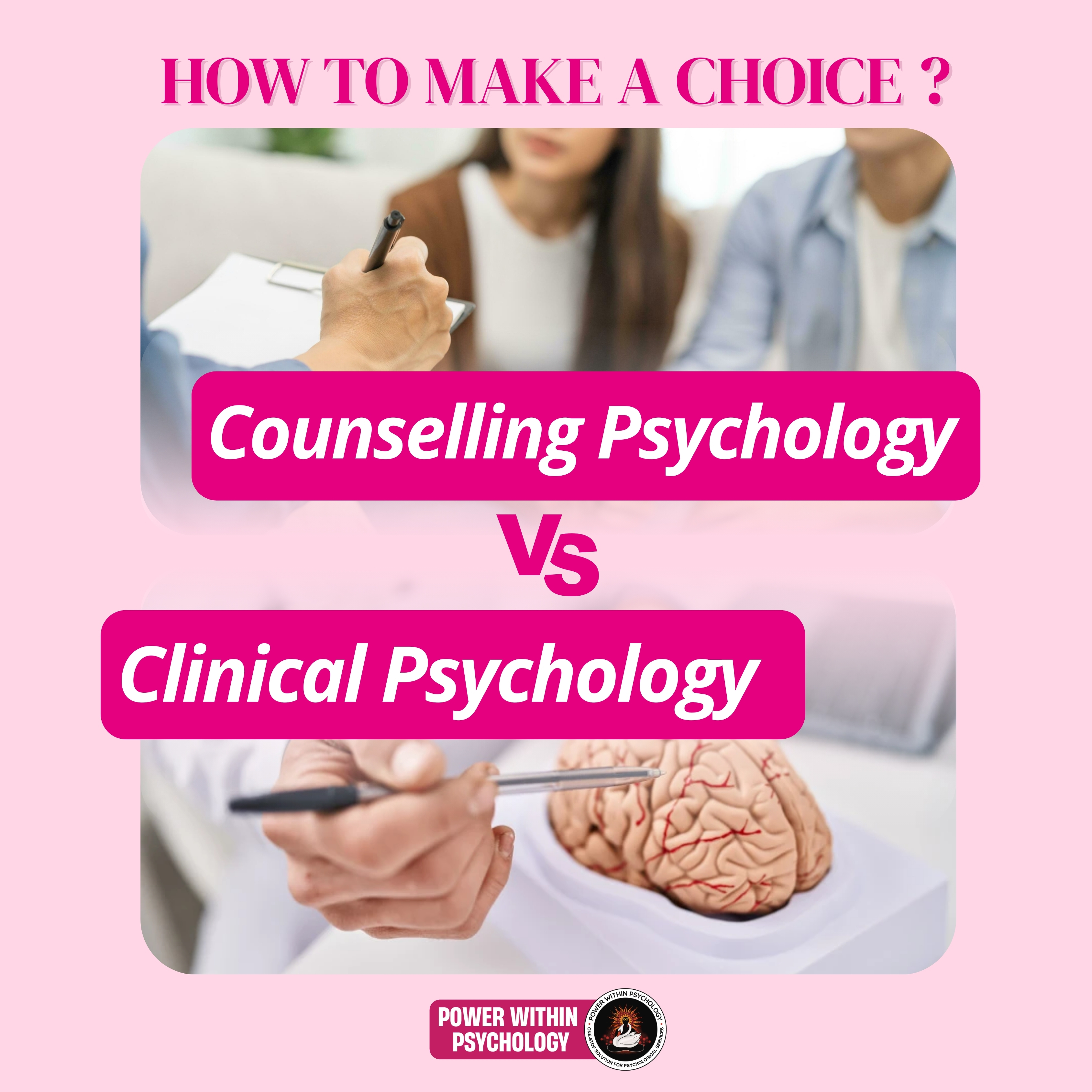
This article explains the key differences between clinical psychology and counselling psychology, and what students should consider when choosing between the two careers. It begins with the options available after Class 12 and then traces the educational pathway required to become either a clinical psychologist or a counselling psychologist in India. Understanding the training requirements, professional titles, licensing regulations, and work settings associated with each field is essential before making a long-term career decision.
Clinical Psychology
A student from arts, commerce, or science can begin their journey in psychology after completing Class 12.
Educational Pathways under the NEP Framework. Presenting the pathway in clear points helps readers quickly understand the process without confusion, which is especially useful when sharing information in academic, organisational, or professional settings.
Before a Bachelor’s Degree in Psychology
- Students who complete a 4-year NEP bachelor’s degree in psychology can directly apply for advanced clinical psychology training programs.
- Students who have completed a 3-year bachelor’s degree in psychology can still continue in the field by completing an additional year of postgraduate study or a bridge course.
- This additional year helps them meet the equivalent four-year academic requirement needed before applying to professional clinical psychology programs.
- Once this requirement is completed, students from both the 4-year NEP system and the earlier 3-year bachelor’s system become eligible to pursue specialised training in clinical psychology.
After Completing a Bachelor’s Degree in Psychology
Within the new NEP framework, there are multiple pathways that can lead to becoming a licensed clinical psychologist.
1. Post Graduate Diploma in Clinical Psychology (PGDCP)
Duration: 1 year or 2 years
Graduates who complete this program may receive the designation Clinical Psychology Associate (depending on RCI guidelines and institution).
2. MA in Clinical Psychology
Duration: 2 years
This program has gradually replaced the earlier MPhil in Clinical Psychology in many institutions.
Students completing this training and meeting RCI requirements can receive the professional title of Clinical Psychologist.
Students Without a Bachelor’s Degree in Psychology – good news !!
- Under the updated guidelines of the Rehabilitation Council of India effective from 2025–26, eligibility requirements for clinical psychology training have become stricter.
- Students who hold a bachelor’s degree in a subject other than psychology cannot directly apply for advanced clinical psychology programs.
- Such students must first complete additional psychology training, which may include a postgraduate diploma, a bridge course, or a 2-year Master’s degree in Psychology.
- Many institutions also require students to achieve at least 60% or a similar qualifying score in their psychology postgraduate degree.
- After completing the required psychology qualification, these students can then become eligible to apply for M.A. Clinical Psychology or other recognised clinical psychology training programs.
Pathway
Here is the step-by-step path if you do NOT have a Bachelor’s degree in Psychology but want to become a licensed Clinical Psychologist in India:
1. Complete a Master’s Degree in Psychology
- Do MA or MSc in Psychology from a UGC-recognised university.
- Some universities allow non-psychology graduates to enrol.
- If your background is unrelated, they may require a bridge course or prerequisite subjects.
After your Master’s, you must enter an RCI-approved clinical training program.
3. Complete One of These Professional Clinical Programs
You must do one of the following:
- M.Phil in Clinical Psychology (valid for 2025 enrollments) or the new MA in Clinical Psychology (phasing in 2025-26)—following your Master’s degree.
These programs include supervised clinical training, assessment, and therapy practice.
4. Register with the Rehabilitation Council of India
- After completing the program, apply for RCI registration.
- Only RCI-registered professionals can legally practice as Clinical Psychologists in India.
5. Start Practising– Once registered with RCI, you can work in:
- Hospitals
- Mental health clinics
- Rehabilitation centers
- Private practice

Additional Preparation Before Entering Clinical Psychology
1. Entrance Exams
Many programs require entrance exams conducted by universities or institutes, such as
2. Research Experience
Students are often expected to demonstrate research exposure through:
- Research projects during undergraduate or postgraduate studies
- Dissertation work
- Participation in psychology research labs
3. Clinical Exposure and Internships
Before applying to advanced clinical programs, students benefit greatly from:
- Internships in hospitals or mental health centres
- Volunteer work in NGOs
- Exposure to psychological assessments and therapy environments
These experiences strengthen applications and prepare students for the demands of clinical training.
Roles of a Clinical Psychologist
Clinical psychologists specialise in the assessment, diagnosis, and treatment of mental disorders such as depression, anxiety, personality disorders, and severe psychiatric conditions.
Their work typically involves:
- Conducting psychological assessments and diagnostic evaluations
- Administering psychological tests
- Providing psychotherapy (for example, cognitive-behavioural therapy)
- Developing treatment plans for patients
- Working closely with psychiatrists and other mental health professionals
Settings of Work for Clinical Psychologists
Clinical psychologists work in various healthcare and specialised environments, including:
- Hospitals and psychiatric units
- Rehabilitation centres
- Mental health clinics
- Forensic settings supporting the legal system
- Private clinical practice
Their work is crucial for improving mental health outcomes and overall quality of life for individuals facing psychological disorders.

Counselling Psychology
Counselling psychology focuses on helping individuals manage life challenges, emotional difficulties, and adjustment issues.
In many cases, a Master’s degree in Psychology, preferably with a specialisation in counselling, can allow individuals to begin practising as counselling psychologists.
However, developing competence in this field requires:
- Structured training
- Supervised internships
- Continuous professional development
Students often strengthen their training through certification courses, internships, and doctoral programs, such as a PhD in Psychology.
Choosing a reputable university or training institute also plays a significant role in building professional credibility.
Roles of a Counselling Psychologist
Counselling psychologists typically work with individuals experiencing everyday stress, relationship concerns, career confusion, and adjustment difficulties.
Their responsibilities include:
- Supporting psychological growth across different stages of life
- Working mainly with individuals within the normal range of functioning
- Providing guidance during life transitions and emotional challenges
- Promoting prevention and mental wellness
- Encouraging personal development and social effectiveness
Settings of Work for Counselling Psychologists
Counselling psychologists commonly work in:
- Schools and colleges
- NGOs and community organisations
- Corporate wellness programs
- Private counselling practices
Their work focuses on improving emotional well-being and helping individuals cope with life’s everyday challenges.

Things to Consider While Choosing Between Clinical and Counselling Psychology
1. Financial Resources
Clinical psychology involves longer, costlier training with delayed earnings. Counselling psychology allows earlier entry into paid work, even right after your master’s, and is generally more affordable.
2. Time
Clinical psychology can take 7–9 years; counselling psychology usually allows practice after a Master’s degree, around 5 years.
3. Work Dependencies and Personal Commitments
Clinical training is full-time and rigid. Counselling psychology offers more flexible pathways, suitable for balancing personal responsibilities and commitments.
4. Interest in Clinical Disorders vs Life Concerns
Choose clinical psychology if you want to work with mental disorders, assessments and diagnosis; choose counselling psychology if you prefer working with life stress, daily hassles, relationships, and adjustment issues.
5. Interest in Medical or Psychiatric Settings
Clinical psychology suits those comfortable in hospitals and psychiatric teams. Counselling psychology is better suited to schools, colleges, NGOs, corporates, and private practice.
6. Tolerance for Long Training
Clinical psychology demands highly competitive, intensive training. Counselling psychology is demanding too, but less centralised and restrictive.
7. Career Goals
Hospitals and psychiatric settings require clinical psychology. Schools, corporates, NGOs, and flexible private practice align more with counselling psychology.
Overall, it is very important to seek proper guidance while you make a decision between counselling and clinical psychology as a career. You should set your priorities, your expectations and finances straight. It is not just money you are investing, it is your time and a better part of your energies for a while. Seek out professionals from both fields, speak with them and manage your career decisions accordingly. After all, this important decision is going to set the tone of your career in psychology.
Share this article by Power Within Psychology (PWP):

Discover more from Power Within Psychology | BLOGS
Subscribe to get the latest posts sent to your email.