


What is CBT?
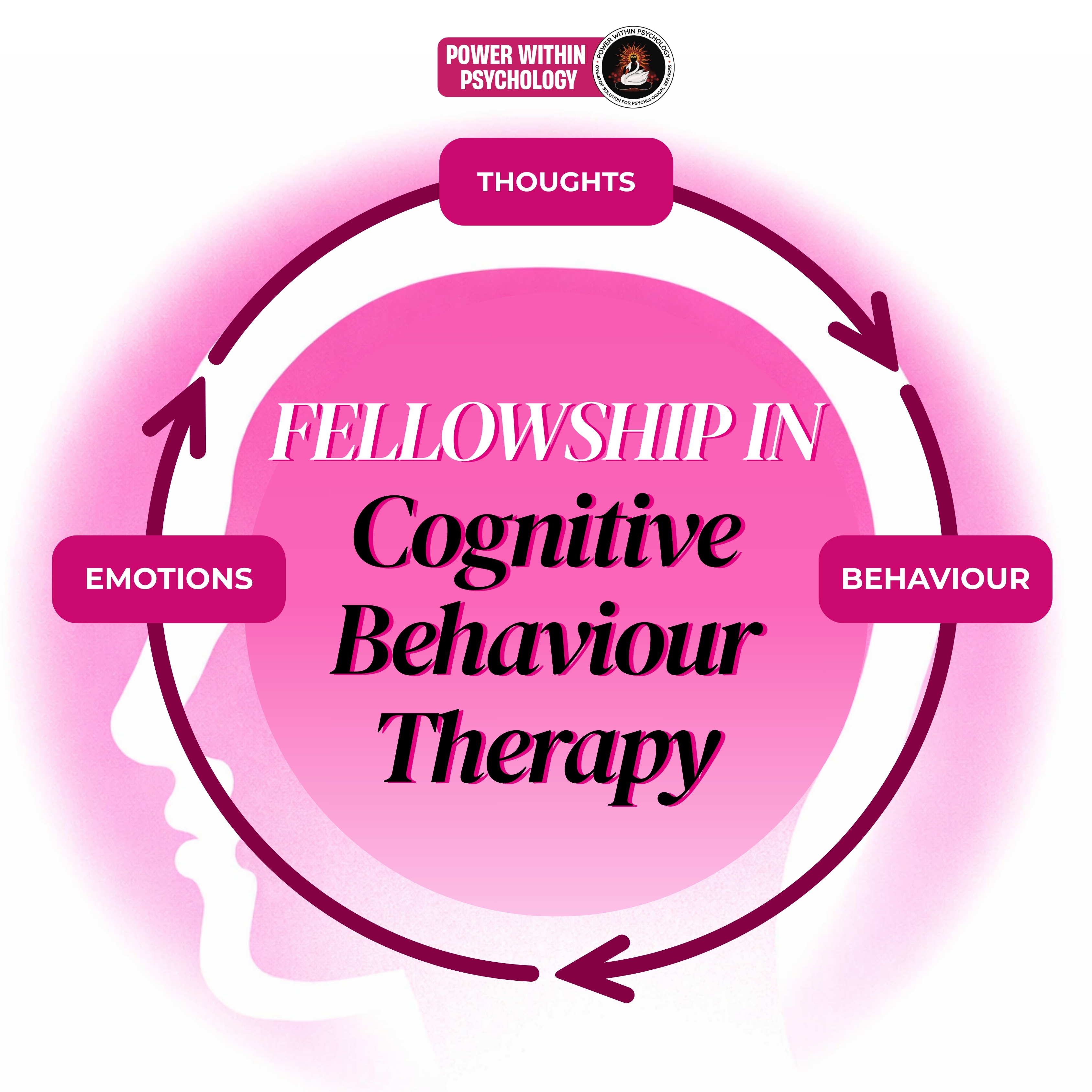
Cognitive Behaviour Therapy (CBT) is a type of talk therapy that focuses on how our thoughts, feelings, and behaviours are connected. It is based on the idea that the way we think about situations affects how we feel and how we act.
In CBT, a trained mental health professional—such as a clinical psychologist, counselling psychologist, or psychiatrist—helps individuals identify negative or unhelpful thinking patterns and replace them with more realistic and balanced ones. CBT is widely used worldwide, including India, because it is structured, practical, and supported by strong scientific research. It teaches people useful strategies to manage problems like anxiety, depression, stress, panic attacks, and obsessive–compulsive disorder (OCD), helping them develop healthier ways of thinking and coping with challenges.
What happens after your master’s degree if you want to specialise in therapy?
One of the most focused training options offered by the institute is the Fellowship in Cognitive Behaviour Therapy (CBT). This blog walks you through that program in detail, what it teaches, who can apply, how selection works, and what the training experience looks like.
Fellowship in Cognitive Behaviour Therapy at NIMHANS
Cognitive Behaviour Therapy (CBT) is a research-supported psychotherapy that focuses on the link between thoughts, emotions, and behaviour. The CBT Fellowship at the Department of Clinical Psychology at the National Institute of Mental Health and Neurosciences focuses on hands-on clinical training, not just theory.
Training includes:
- Conducting CBT sessions with patients
- Learning structured CBT techniques
- Working in the Behavioural Medicine Unit
- Participating in clinical services and case discussions
- Attending academic seminars and departmental activities
- Receiving direct supervision from faculty
The goal is simple: to develop real therapy skills through practical clinical work.

Key Admission Details for the CBT Fellowship
Before thinking about applying, it helps to understand the basic structure of the program.
Course Duration
The Fellowship in Cognitive Behaviour Therapy runs for:
1 year (full-time program).
This is an intensive training period focused mainly on clinical exposure and skill development in CBT.
Department Offering the Fellowship (relevant)
- Department of Clinical Psychology
The department itself is one of the oldest and most influential psychology training centres in India, with decades of experience in clinical training, psychotherapy, and research.
Minimum Requirement for Admission
MPhil/M.A in Clinical Psychology (2 years)
This requirement ensures that applicants already have foundational training in:
- Psychological assessment
- Psychopathology
- Clinical interviewing
- Basic psychotherapy approaches
The fellowship then builds specialised expertise in CBT. Additionally, the qualification (MPhil/MA in Clinical Psychology) must be obtained from an institution recognised by a relevant regulatory body such as the University Grants Commission, Rehabilitation Council of India, or Medical Council of India.
Seats Offered (Limited)
- 2 seats under the Institute Stipendiary Category – Institute Stipendiary Category
Candidates admitted under this category receive a stipend from the institute during training. - 2 seats under the Sponsored / Deputation Category – This is for applicants who are already working in government institutions, universities, or public sector organisations and are officially sponsored by their employer.
Mode of Selection
Admission to the fellowship involves a structured selection process.
Entrance Test + Verification of Original Certificates
Candidates must also meet the required qualifying marks in the entrance test.
- UR / OBC / EWS: 50%
- SC / ST / PwBD: 45%
Age Criteria
The age limit for applicants is:
Maximum 45 years
(as on the date of course commencement).
Stipend (Emoluments)
- Institute Stipendiary Category – Receives a monthly stipend of around ₹25,000
- Sponsored Category– Candidates applying through sponsorship or deputation usually continue receiving their salary from their employer and therefore do not receive a stipend from the institute.
| Item | Approx Amount |
|---|---|
| Monthly stipend | ₹25,000 |
| Total stipend for 12 months | ₹3,00,000 |
| Course fee | ~₹26,350 |
| Approx hostel & basic expenses (estimate) | ~₹60,000 – ₹80,000 |
| Money received after covering costs | ~₹1.9 – 2.1 lakh remaining |
Even after paying the course fee and living expenses, a fellow may still have a significant
amount left from the stipend.
Course Fees
Approximately ₹26,350 (Hostel charges are additional if accommodation is used.)
Leave Policy
Fellows are entitled to:
30 days of annual leave during the one-year program.
However, since the training involves active clinical work, leave is typically managed carefully to ensure continuity of patient care.
Full Fellowship Information Document
Below is the official document containing the detailed admission and program information.
Why This Fellowship Matters for Clinical Psychologists
Many psychologists complete their MPhil/M. A degree in Clinical Psychology and then begin working in hospitals or private practice.
However, specialised therapy training programs like this fellowship help professionals:
- Gain deep expertise in a specific psychotherapy approach
- Work with complex clinical cases
- Receive direct supervision from experienced clinicians
- Strengthen their academic and clinical profile
Because CBT is widely used in treating conditions like depression, anxiety disorders, OCD, and behavioural problems, structured training in this therapy model can significantly improve clinical competence.

Final Thoughts
If you’re planning a long-term career in psychotherapy, especially evidence-based therapies, the Fellowship in Cognitive Behaviour Therapy at the National Institute of Mental Health and Neurosciences is one of the few programs in India that offers focused, supervised CBT training in a clinical hospital setting.
The fellowship may only last one year, but the experience of conducting therapy under supervision, working with multidisciplinary teams, and participating in academic discussions can shape how a psychologist practices therapy for the rest of their career.
FAQ’s
1. Who can apply for the CBT Fellowship at NIMHANS?
Candidates must have completed MPhil/ M.A in Clinical Psychology from an institution recognised by bodies such as the Rehabilitation Council of India or the University Grants Commission.
2. How long is the CBT Fellowship program?
The Fellowship in Cognitive Behaviour Therapy at the National Institute of Mental Health and Neurosciences is a 1-year full-time program.
3. Is there a stipend during the fellowship?
Yes. Candidates under the Institute Stipendiary Category usually receive a monthly stipend, while Sponsored candidates continue receiving a salary from their employer.
4. How are candidates selected for the fellowship?
Admission is typically based on an NIMHANS entrance examination followed by verification of eligibility and documents.
5. Where can students find official course information?
Course details and admission updates are available on the Academics → Courses section of the National Institute of Mental Health and Neurosciences website under Non-Medical Courses.
6. Where can students find official information about NIMHANS courses and fellowships?
Students can check on the website of the National Institute of Mental Health and Neurosciences by clicking on → non-medical courses, PG prospectus, and admission notifications with details about eligibility, seats, and application procedures.
7. How many seats are available for the CBT Fellowship?
Usually, 4 seats are offered – 2 under the Institute Stipendiary category and 2 under the Sponsored/Deputation category at the National Institute of Mental Health and Neurosciences.
8. What is the age limit for applying to the fellowship?
Applicants should generally be below 45 years of age at the time of admission.
9. Does the fellowship include clinical work with patients?
Yes. Fellows actively conduct CBT sessions with patients and participate in clinical services under faculty supervision.
10. Do fellows receive leave during the program?
Yes. Fellows are generally allowed up to 30 days of leave during the one-year fellowship, subject to approval and clinical training requirements at the National Institute of Mental Health and Neurosciences.
Share this article by Power Within Psychology (PWP):

Discover more from Power Within Psychology | BLOGS
Subscribe to get the latest posts sent to your email.