




Table of Content
When we talk about anxiety and depression, we often associate these mental health conditions with adults. However, children can experience emotional and psychological difficulties too. Academic pressure, bullying, family conflicts, social expectations, peer relationships, and other stressful experiences can affect a child’s mental well-being.
But can a child really experience anxiety or depression? Is it just a phase of growing up, or could it be a sign of an underlying mental health concern?
Let’s explore some common facts and myths about childhood anxiety and depression and understand why recognising early signs is important.
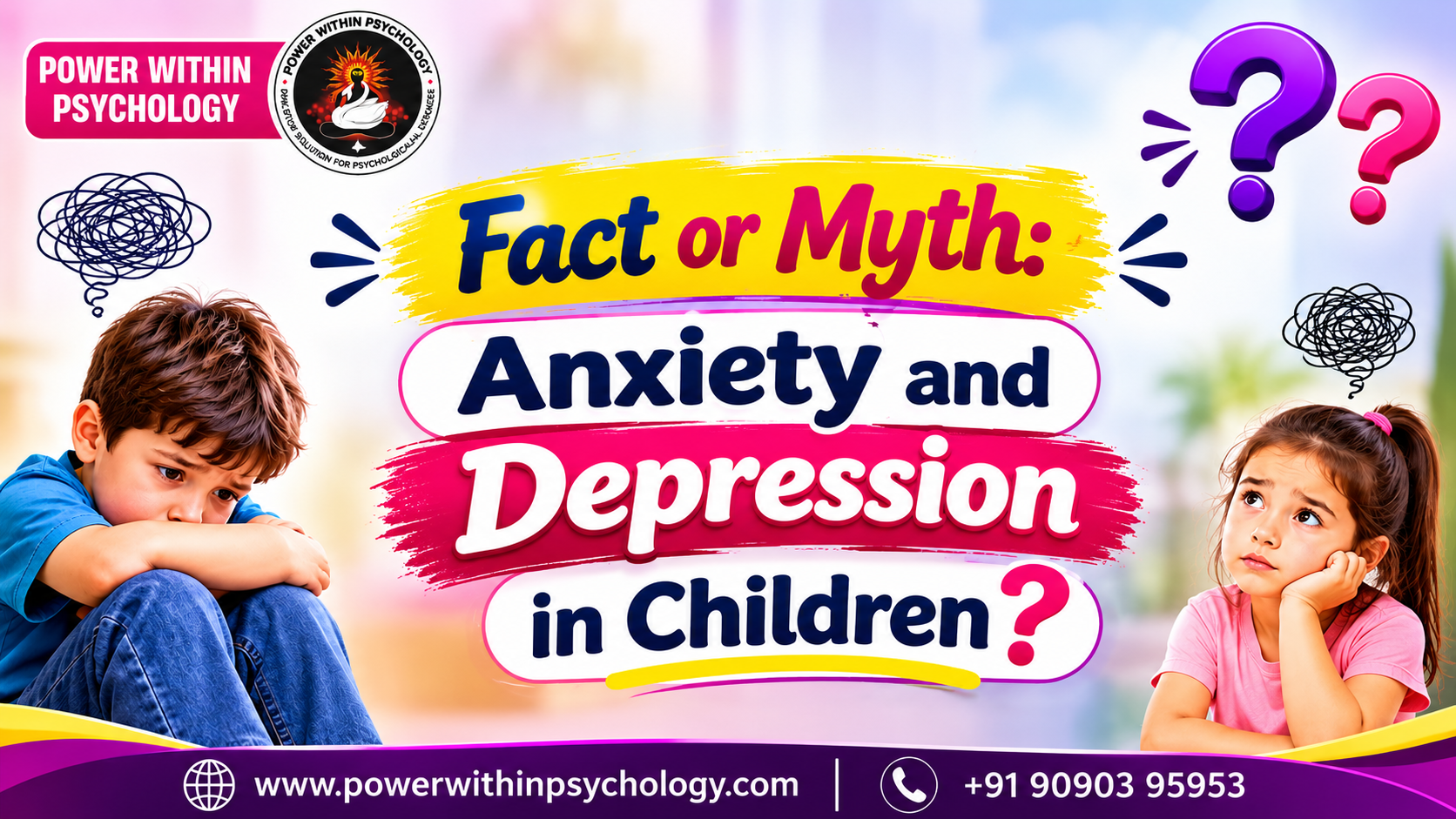
Fact or Myth: Can Children Experience Anxiety and Depression Too?
Yes! Children can experience anxiety and depression, just like adults. Mental health challenges are not limited to adulthood. Even young children and teenagers can experience emotional distress that affects their thoughts, feelings, behavior, relationships, and daily activities.
Common Myths and Facts About Childhood Anxiety and Depression
Understanding the difference between common misconceptions and psychological facts is the first step towards supporting children’s mental health.
Myth 1: Children are too young to experience depression.
Fact: Children can experience depression, although it is less common among very young children than among older children and teenagers. Childhood depression may appear differently from adult depression. Instead of expressing sadness, a child may become irritable, withdrawn, unusually quiet, or lose interest in activities they previously enjoyed.
Myth 2: Anxiety in children is just normal childhood fear.
Fact: Some fears and worries are a normal part of growing up. For example, children may feel nervous before examinations, when starting a new school, or when separated from their parents.
However, when excessive worrying becomes persistent and starts interfering with school, friendships, sleep, or everyday activities, it may indicate an anxiety disorder. NHS+1
Myth 3: A child who laughs and plays cannot be depressed.
Fact: Not every child experiencing depression will openly express sadness. Some children may continue participating in daily activities while internally struggling with feelings of hopelessness, worthlessness, or emotional distress.
Therefore, parents and teachers should not judge a child’s mental health solely by their outward behavior.
Myth 4: Academic pressure is the only reason children experience anxiety and depression.
Fact: Academic pressure can contribute to emotional distress, but it is not the only factor. Several experiences may influence a child’s mental well-being, including:
- Bullying, peer rejection, or social isolation.
- Family conflicts and stressful home environments.
- Lack of emotional support and understanding.
- Traumatic experiences or significant life changes.
- Low self-esteem and difficulties in relationships.
- Biological factors and family history of mental health conditions.
These factors may increase vulnerability, although no single factor necessarily causes a mental health condition.
Myth 5: Children will automatically overcome emotional difficulties as they grow older.
Fact: While some childhood fears and emotional difficulties resolve naturally, persistent symptoms should not be ignored. Without appropriate support, mental health concerns may interfere with a child’s learning, relationships, social development, and overall well-being.
Early identification and professional support can help children develop healthier coping strategies.
Signs of Anxiety and Depression in Children
Children may not always have the words to explain what they are experiencing. Therefore, parents and teachers should pay attention to changes in their behavior, emotions, and daily routines.
| Signs of anxiety | Signs of depression |
|---|---|
| Excessive worrying or fear | Persistent sadness or irritability |
| Difficulty sleeping | Loss of interest in favourite activities |
| Frequent headaches or stomach aches | Social withdrawal |
| Restlessness and irritability | Low self-esteem or feelings of worthlessness |
| Avoiding school or social situations | Changes in appetite and sleep |
| Difficulty concentrating | Persistent tiredness or low energy |
Note: These signs alone do not confirm anxiety or depression. A proper assessment by a qualified mental health professional is necessary to identify the underlying concern and determine an appropriate course of support.
How Can Parents and Teachers Support Children?
A supportive environment can make a meaningful difference in a child’s emotional well-being. Parents, teachers, and caregivers play an important role in recognizing emotional difficulties and encouraging children to seek support.
Some helpful approaches include:
1. Encourage Open Communication: Create a safe space where children feel comfortable expressing their thoughts, fears, and emotions without the fear of being judged, criticised, or punished. Ask open-ended questions such as, “How are you feeling today?” or “Is something bothering you?” to encourage meaningful conversations.
2. Listen with Empathy: Give children your undivided attention when they share their concerns. Avoid interrupting, comparing their problems with others, or dismissing their feelings as attention-seeking behaviour. Sometimes, children do not need immediate solutions; they simply need someone who listens and understands them.
3. Avoid Unnecessary Pressure: Every child has different abilities, interests, and learning capacities. Parents and teachers should maintain realistic academic and behavioural expectations rather than constantly comparing children with their peers. Appreciate their efforts, progress, and achievements instead of focusing only on examination results or performance.
4. Promote Healthy Daily Routines: Encourage children to maintain a balanced routine that includes adequate sleep, nutritious food, physical activity, hobbies, recreational activities, and meaningful social interactions. Limiting excessive screen time and encouraging outdoor play can also contribute to their overall well-being.
5. Recognise Behavioural and Emotional Changes: Pay attention to persistent changes in a child’s mood, sleeping patterns, appetite, academic performance, classroom participation, or social relationships. Sudden withdrawal, frequent irritability, loss of interest in favourite activities, or repeated physical complaints should not be ignored. Such changes may indicate that a child needs additional emotional support.
6. Build Self-Esteem and Emotional Resilience: Encourage children to recognise their strengths, accept their mistakes, and understand that failure is a natural part of learning. Appreciate their individuality and help them develop healthy coping strategies to manage stress, disappointment, and challenging situations.
7. Seek Professional Guidance When Needed: If emotional or behavioural difficulties persist, become severe, or interfere with a child’s everyday functioning, consult a qualified mental health professional for an appropriate assessment and guidance. Early intervention can help children understand their emotions and develop effective coping mechanisms.
An Important Reminder: If a child expresses thoughts of self-harm or suicide, take their words seriously. Do not dismiss or leave the child unsupported. Ensure their immediate safety and seek urgent assistance from a qualified mental health professional or emergency service.
At Power Within Psychology, we offer professional counselling services, including career counselling and psychological guidance.
Through Manosthiti, we also provide evidence-based psychological support, assessments, career guidance, and training programmes, combining professional expertise with compassionate care.
Connect with us for personalised online and offline counselling sessions tailored to your needs. Take the first step towards clarity, confidence, and better mental well-being!
Share this article by Power Within Psychology (PWP):

Discover more from Power Within Psychology | BLOGS
Subscribe to get the latest posts sent to your email.