


Table of Content
Have you ever wondered why two people respond differently to the same situation? Why do some individuals experience anxiety while others manage stress effectively? How does childhood shape adult personality? What makes an athlete perform confidently under pressure?
Psychology is the scientific study of the mind and behaviour. It explores how individuals think, feel, learn, develop, make decisions and interact with their surroundings. It is not limited to mental health or counselling; rather, it extends to education, healthcare, sports, workplaces, relationships, personality development and even the criminal justice system.


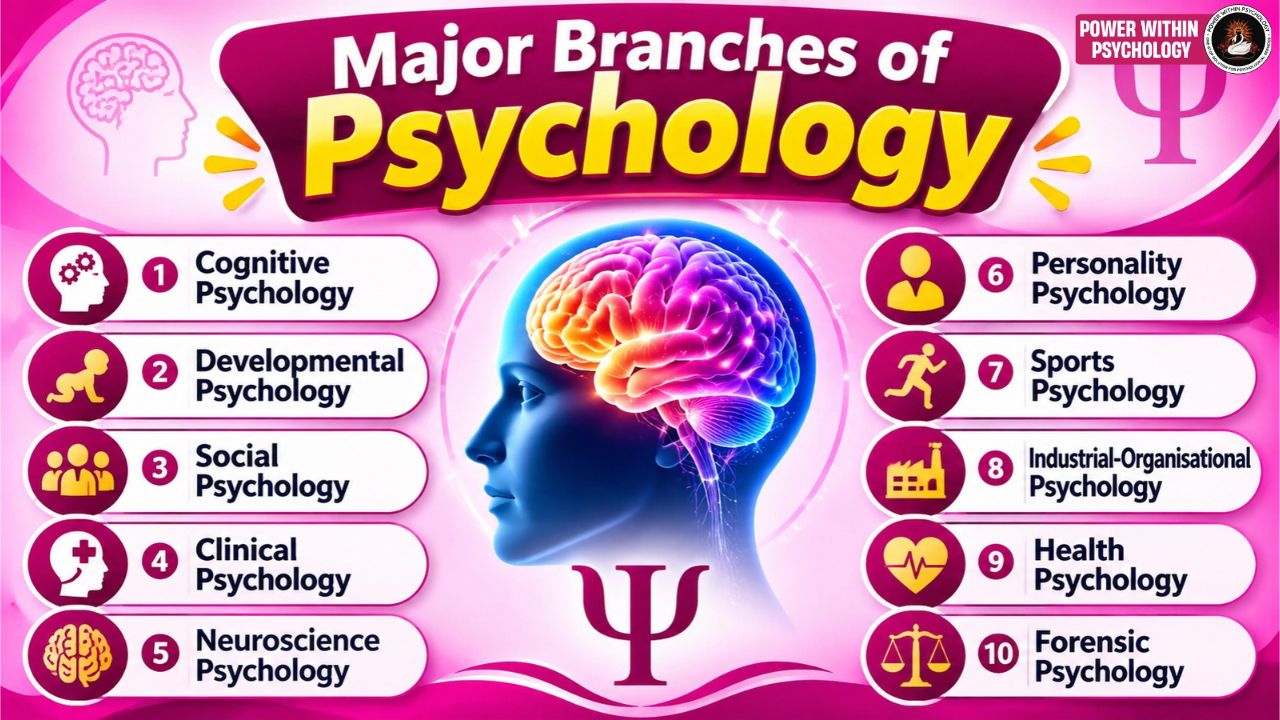
Major Branches of Psychology
Clinical Psychology
Clinical Psychology focuses on the assessment, understanding, prevention and psychological treatment of mental, emotional and behavioural difficulties.
Clinical psychologists work with individuals experiencing concerns such as depression, anxiety disorders, trauma-related difficulties, mood disorders and other psychological conditions. They use psychological assessments and evidence-based therapeutic approaches to support mental health.
Key Areas of Focus:
- Psychological assessment and evaluation.
- Mental health conditions and their management.
- Psychotherapy and evidence-based interventions.
- Emotional and behavioural difficulties.
- Mental health promotion and prevention.
Real-Life Application:
An individual experiencing persistent anxiety, emotional distress or depressive symptoms may seek professional assessment and psychological support to understand their difficulties and develop healthier coping strategies.
Career Opportunities: Clinical psychologist, mental health researcher, psychological assessment professional and academic researcher, subject to applicable professional qualifications and registration requirements.
Counselling Psychology
Counselling Psychology focuses on helping individuals understand themselves, manage life challenges, improve interpersonal relationships and develop effective coping strategies.
It recognises that counselling is not only for individuals experiencing serious psychological difficulties. Students, working professionals and individuals going through personal or social transitions can also benefit from counselling.
Key Areas of Focus:
- Emotional well-being and personal growth.
- Stress and adjustment-related concerns.
- Relationship and interpersonal difficulties.
- Self-esteem and self-awareness.
- Decision-making and coping strategies.
- Career guidance and personal development.
Real-Life Application:
A student struggling with academic pressure, low confidence or career confusion may seek counselling to explore their concerns, identify personal strengths and develop a realistic plan for the future.
Career Opportunities: School counsellor, counselling professional, career guidance professional, student support professional and researcher, depending on qualifications and role requirements.


Cognitive Psychology
Cognitive Psychology studies the mental processes through which individuals acquire, process, store and use information.
It helps us understand how the human mind functions when we pay attention, remember information, solve problems, make decisions and understand language.
Key Areas of Focus:
- Attention and perception.
- Learning and memory.
- Thinking and reasoning.
- Problem-solving and decision-making.
- Language and information processing.
- Intelligence and cognitive functioning.
Real-Life Application:
When students concentrate during a classroom lesson, remember information during examinations or use logical reasoning to solve a problem, cognitive processes are involved.
Career Opportunities: Cognitive psychology researcher, academic professional, research associate, cognitive science professional and human-computer interaction researcher.
Developmental Psychology
Developmental Psychology examines how individuals grow, change and develop throughout their lives, from infancy and childhood to adolescence, adulthood and old age.
It explores physical, cognitive, emotional and social development and helps explain how experiences, relationships and environmental influences shape individuals at different stages of life.
Key Areas of Focus:
- Physical and cognitive development.
- Emotional and social development.
- Language acquisition.
- Personality development.
- Childhood and adolescent development.
- Age-related changes throughout the lifespan.
Real-Life Application:
Understanding why adolescents experience changes in emotions, identity, relationships and decision-making helps parents, teachers and professionals provide appropriate developmental support.
Career Opportunities: Developmental psychology researcher, child development professional, academic researcher and professionals working in child and family support services.


Social Psychology
Social Psychology studies how individuals’ thoughts, emotions and behaviours are influenced by other people and their social surroundings.
It explores why people behave differently in groups, how attitudes develop, how relationships influence decisions and why individuals sometimes change their opinions because of social pressure.
Key Areas of Focus:
- Social influence and conformity.
- Attitudes and persuasion.
- Group behaviour and group dynamics.
- Prejudice and discrimination.
- Interpersonal relationships.
- Social identity and social perception.
Real-Life Application:
When an individual changes an opinion because of peer pressure or follows a particular trend because others are doing so, social psychological processes may be involved.
Career Opportunities: Social psychology researcher, academic professional, behavioural researcher and professionals working in community development and social research.
Forensic Psychology
Forensic Psychology involves applying psychological knowledge and principles within legal and criminal justice settings.
It explores the relationship between human behaviour and the law. Professionals in this field may contribute psychological expertise to legal proceedings, criminal investigations, correctional settings and matters involving psychological functioning.
Key Areas of Focus:
- Criminal behaviour and its psychological aspects.
- Psychological assessment in legal contexts.
- Eyewitness memory and testimony.
- Juvenile delinquency.
- Risk assessment and rehabilitation.
- Psychology and the criminal justice system.
Real-Life Application:
Understanding how memory, stress and suggestibility may influence an eyewitness’s account is an example of forensic psychology.
Career Opportunities: Forensic psychology researcher, correctional services professional, research associate and professionals working in legal and rehabilitation settings, subject to relevant qualifications.
Industrial and Organizational Psychology
Industrial and Organizational (I/O) Psychology focuses on human behaviour in workplaces and organizations.
It applies psychological principles to improve employee well-being, job satisfaction, productivity, leadership, teamwork and organizational effectiveness.
Key Areas of Focus:
- Employee motivation and job satisfaction.
- Recruitment and selection.
- Leadership and management.
- Workplace stress and well-being.
- Training and employee development.
- Organizational culture and team dynamics.
Real-Life Application:
An organization introducing employee well-being programmes, conducting job satisfaction surveys or improving leadership practices is applying principles of I/O Psychology.
Career Opportunities: Organizational psychology professional, HR specialist, talent development professional, organizational development consultant and workplace behaviour researcher.


Personality Psychology
Personality Psychology studies individual differences in the ways people think, feel and behave. It explores how personality develops, how personality traits influence behaviour and why individuals respond differently to similar situations.
It helps us understand the unique characteristics, patterns and tendencies that make each individual different.
Key Areas of Focus:
- Personality traits and characteristics.
- Individual differences.
- Self-concept and identity.
- Personality development.
- Personality theories and models.
- The influence of heredity and environment on personality.
Real-Life Application:
Consider two individuals facing the same challenging situation. One may respond confidently and take immediate action, while the other may feel hesitant and prefer careful planning. Personality Psychology helps explore the individual differences behind such responses.
Career Opportunities: Personality psychology researcher, academic professional, personality assessment researcher and professionals working in behavioural research.
Oncology Psychology (Psycho-oncology)
Oncology Psychology, more commonly discussed under the broader field of Psycho-oncology, focuses on the psychological, emotional, behavioural and social aspects of cancer.
A cancer diagnosis can affect not only physical health but also an individual’s emotions, relationships, self-image and overall quality of life.
Psycho-oncology aims to support individuals diagnosed with cancer, their families and caregivers throughout the cancer journey, including diagnosis, treatment, recovery and survivorship.
Key Areas of Focus:
- Emotional adjustment following a cancer diagnosis.
- Anxiety, depression and psychological distress.
- Coping with treatment-related challenges.
- Body image and changes in self-esteem.
- Family and caregiver support.
- Emotional well-being and quality of life.
- Psychological support during survivorship and palliative care.
Real-Life Application:
An individual diagnosed with cancer may experience fear, uncertainty, sadness or emotional distress. Psycho-oncology professionals help address these psychological concerns and support healthy coping strategies alongside medical treatment.
Career Opportunities: Psycho-oncology researcher, psycho-oncology professional, behavioural health researcher and professionals working in cancer care and supportive care settings, with appropriate training and clinical supervision.
Biological Psychology
Biological Psychology, also known as Biopsychology or Behavioural Neuroscience, explores the relationship between biological processes and human behaviour.
It examines how the brain, nervous system, hormones, genetics and other biological mechanisms influence thoughts, emotions, learning and behaviour.
This branch helps explain the biological foundations of psychological experiences.
Key Areas of Focus:
- Brain structure and functioning.
- Nervous system and behaviour.
- Neurotransmitters and hormones.
- Genetics and behaviour.
- Biological influences on emotions.
- Sleep, memory and cognitive functioning.
Real-Life Application:
Understanding how brain activity, hormonal changes and neurotransmitters are associated with mood, sleep, motivation and emotional responses is an example of biological psychology.
Career Opportunities: Biological psychology researcher, behavioural neuroscience researcher, academic professional and research associate in neuroscience-related fields.
Conclusion
Psychology is much more than the study of mental health. It is a diverse scientific discipline that helps us understand human thoughts, emotions, behaviour, personality, relationships and development.
From supporting mental well-being and improving classroom learning to enhancing athletic performance and helping individuals cope with cancer, the different branches of Psychology have meaningful applications across various aspects of life.
Exploring these branches can help students understand the wide scope of Psychology, discover their areas of interest and make informed decisions about their academic and professional journeys.
Every branch offers a different lens to understand one fascinating subject: the human mind and behaviour.






Share this article by Power Within Psychology (PWP):

Discover more from Power Within Psychology | BLOGS
Subscribe to get the latest posts sent to your email.